
Why Dick’s and Barnes & Noble Are Building Third Places

People crave more opportunities to be alone together. Is there a brand opportunity here? Photo by Michael Kyule via Unsplash.
Somewhere in your city a group of strangers is sitting in a room reading books in complete silence. There is no book club discussion. There's no assigned reading, no host playing Literature Professor for a day. They came to be quiet in the same place at the same time as other people. Silent book clubs are booming. So are "morning coffee raves" and, swear to God, parties where people gather to do their taxes and paperwork together.
I remember Silent Reading Clubs from my days in Seattle, so this is not a hangover from COVID-19 social isolation. It’s a quiet admission of something we're not supposed to admit we want: to be alone, together. Silent Reading Club, Admin Night, et al. allow us to sit near other humans without the pressure to perform a relationship.
We've built an entire cottage industry to engineer a thing we used to get for free. The sociologist Ray Oldenburg named it the "third place" back in 1989 — the space that isn't home (the first place) and isn't work (the second), where community actually happens. The diner. The barbershop. The corner pub. The library. Those places have been quietly disappearing for decades, and we're only now feeling the full weight of the absence.
Scholars have the receipts. Harvard's Making Caring Common project found in its Loneliness in America research that a strong majority of adults want more public spaces designed for connection. It's not just older generations feeling nostalgic for the mall food court, either. When the UK government gathered input for its National Youth Strategy, young people asked, over and over, for the same thing: more youth clubs, more sports facilities, more free places to simply exist.
What does this mean for brand strategy? Well, brands often spend substantial research budgets to better understand gaps in the market. If people want more third spaces, is that a viable opportunity for brands?
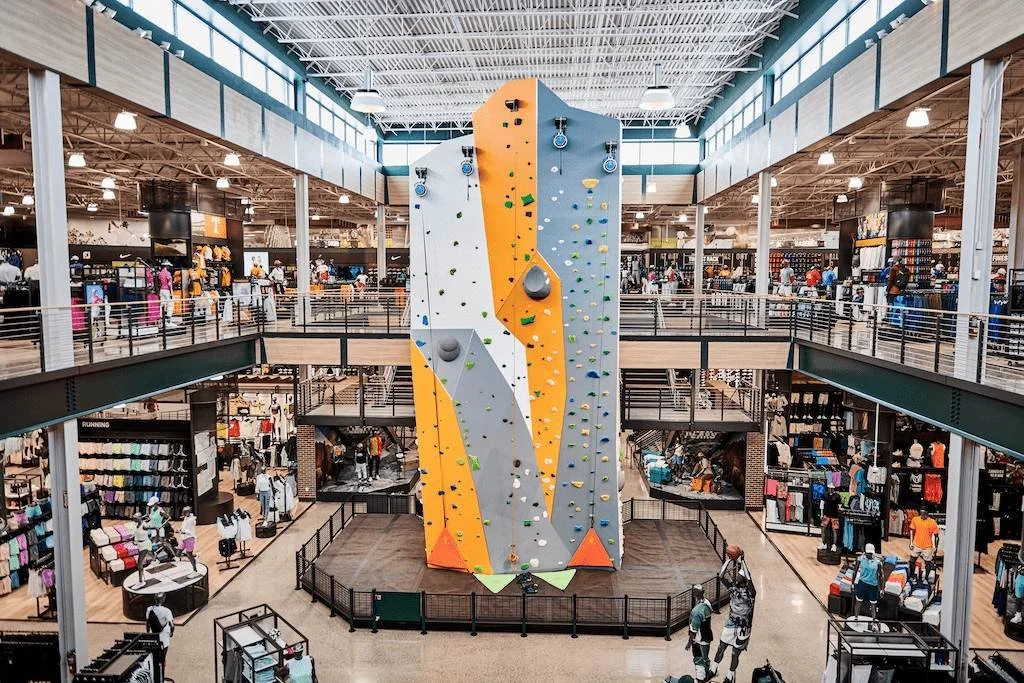
The Visit Knoxville tourism website describes the Dick’s Sporting Goods House of Sports:
“A destination devoted to sport. From baseball to yoga and golf to lacrosse, no matter how you stay active, we want to help you reach the top of your game. Not only do we have the top gear you need to perform your best, we have created an interactive space where you can find inspiration and practice your skills.”
Dick’s Runs an Experiment
About a decade ago, Dick's Sporting Goods faced the same existential threat as every other big-box retailer. Ecommerce was eating physical retail alive, and Wall Street analysts had a tidy prescription: shrink the footprint, cut the stores, defend the margins. Get smaller before Amazon forces that decision for you.
Dick's did the opposite. It got bigger — dramatically. It started building House of Sport locations, cavernous 100,000-plus-square-foot stores outfitted with rock climbing walls, batting cages, golf simulators, turf fields, running tracks, and in some cases full ice rinks. If you're picturing a store, recalibrate. Picture a small sports complex that happens to sell cleats.
Importantly, this is not first and foremost a sales environment. Dick's designed these places for kids and teen athletes to play, train, and hang out. House of Sports locations offer running clinics, community events, and a steady stream of reasons to show up that have nothing to do with buying anything. As one Dick's executive put it, House of Sport was built to be "a third space to interact with the culture of sport, as much as purchase product."
The bet has paid off in a way that should make every skeptical CFO roll their eyes back into their head. Since the first House of Sport opened in 2021, the format has drawn several times the foot traffic of a conventional Dick's store. A traditional location generates something like $20 million a year; a House of Sport averages closer to $35 million. Shoppers travel farther to get there, stay longer once they arrive, and — the part that matters most — they come back, over and over, long after the novelty could have worn off.
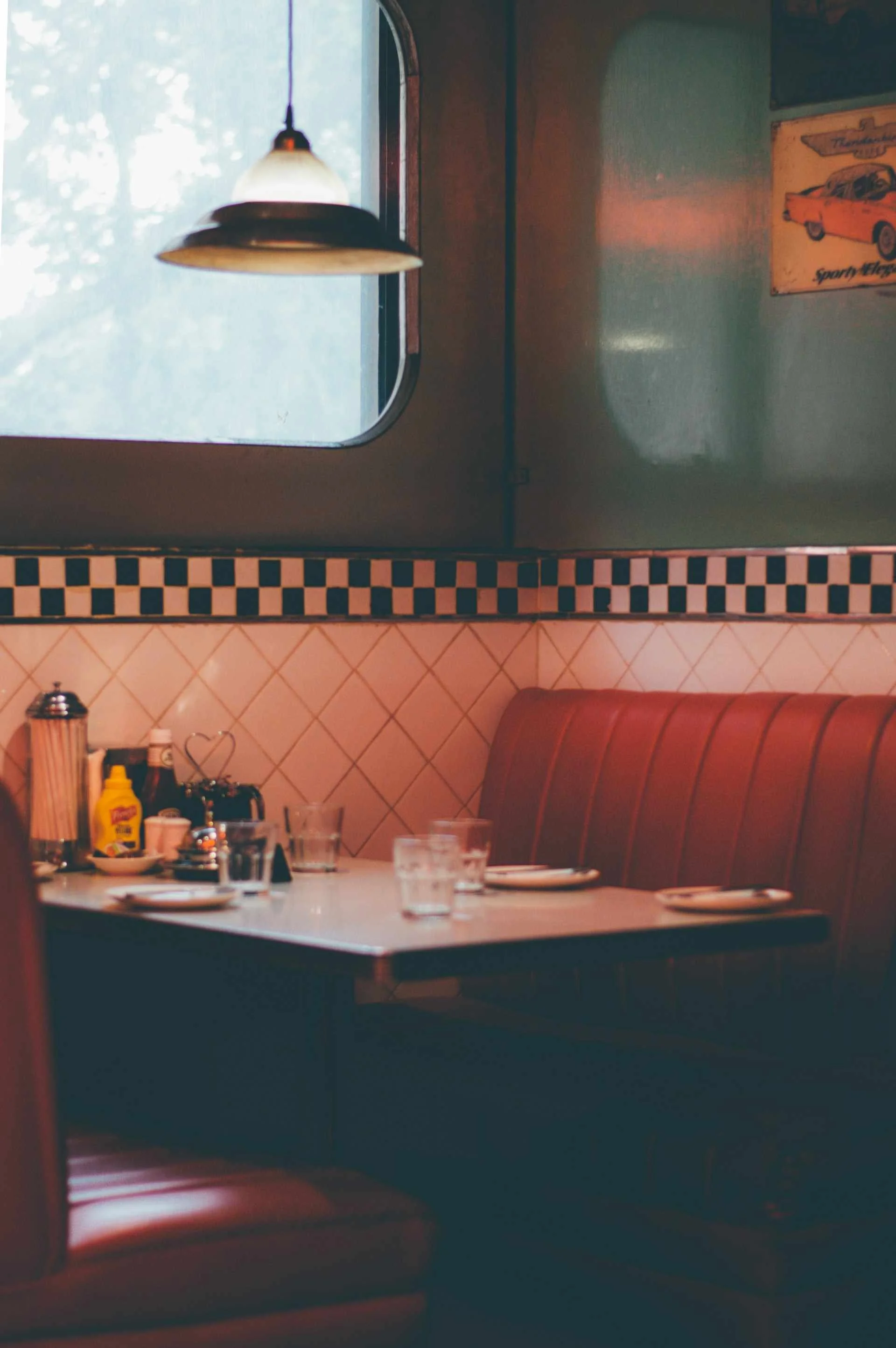
When I looked up “Diner” on Unsplash, the top results were American-style diners in foreign countries.
This “All-American Diner” is in New Delhi, India.
Now Watch It Happen in a Bookstore
If you think this only works when you can afford to build a climbing wall, look at the least likely comeback story in American retail. Remember when Barnes & Noble was supposed to be dead — the corporate villain that killed the indie bookshop, only to be killed in turn by Amazon? After a decade of closures, it's opening stores again: roughly 60 in 2025, with another 60 or so planned for 2026.
The turnaround, led by CEO James Daunt, runs on almost exactly the opposite instinct you’d expect to find in a large, national corporation. Daunt came out of independent bookselling, and his central move was to strip power away from headquarters and hand it to the people running each store. No more identical floor plans dictated from above, no more publishers paying to stack their books by the door. Each location is encouraged to look like the neighborhood it sits in and to stock what its actual readers care about. Daunt talks about reopenings the way you'd talk about a homecoming — one store, he noted, marked "a return to Naperville, where for 25 years we were a community staple."
And, as a gal who loves an indie bookstore, I’m thrilled to report that Barnes & Noble's revival is happening at the same time as a boom in independent bookstores, with around 605 new indie shops opening in the U.S. in 2025 — up 87% from the year before. A quick glance might assume that these two growth booms should be at war with each other. Think a little bit longer and it’s clear that they're responding to the same hunger. When people are starved for somewhere to belong, the bookstore stops being a place you buy books and becomes a place you go. There's room for more than one location, because the thing being sold was never really the book.
What If You Don’t Have a Rooftop or Rare Book Room?
The instinct, reading this, is to think it's a story about scale and capital. Most brands can't build a stadium behind the store, and shouldn't try. But that doesn’t mean brands need to settle for a sad pop-up and a step-and-repeat.
The real insight is about the kind of value being offered. Shopify's Arpan Podduturi frames it well: the experiential retail that works is "repeatable, not one-off gimmicks where you take an Instagram selfie and call it a day." (Hello, Museum of Ice Cream). A pop-up is a transaction wearing an event's clothing. It extracts a photo and a purchase and sends you home. A third place does the opposite — it gives you a reason to return when you're not buying anything at all, and trusts that belonging, over time, is worth more than any single sale.
And the appetite isn't limited to teenagers who want to shoot hoops. Roughly two-thirds of North American adults say that visiting stores with social or community features makes them feel less isolated. Just like young people in the UK, Americans are telling companies in survey data that they will feel less lonely if you give them somewhere to go. That is one of the most generous invitations a brand will ever receive.
You don’t need another limited-edition, hip influencer collaboration. You need to decide that your relationship with people is worth more than the next transaction — and then design a place, physical or otherwise, where they can simply be. The brands that figure this out won't just sell more. They'll become a solution to the thing people are aching for and can't quite name.
The next town square may be the batting cages, the mah jongg parlor, the recycling hub. The question is what will your brand build?
Nancy Martira is a brand strategist and communications consultant. She delivers human-centered strategies tailored to your specific business challenges and market position. You can hire Nancy for brand positioning and content strategy projects. Have something else in mind? Let's talk.
