
The Professional Positioning Statement Your Résumé Needs
(It’s Not a Summary)
If you’ve spent time trying to write a stated objective for your résumé, maybe you’ve had this thought:
“Objective? My objective is to get this job. My objective is to get any job. My objective is to have an actual human being put human eyes on this document. Seriously, what am I supposed to write here?”
Applicant tracking software may have depersonalized the modern job search, but the foundation of writing an effective résumé hasn’t changed: lead with a strong summary, front-load your credentials, tell them what you bring to the table. However, the top real estate of your résumé often sounds a lot like the job description you’re targeting — or a slightly cleaned-up version of your LinkedIn bio. Technically accurate, entirely forgettable.
If your job search feels stalled, skip the résumé “summary” or “objective,” and invest your time in developing a professional positioning statement.
What a summary does vs. what positioning does
A summary describes what you’ve done. It looks backward — credentials, tenure, job titles, and industries. A summary answers the questions: “What have you done? How did you get here?”
A positioning statement does something structurally different. A positioning statement clearly and memorably lays out why you’re the right person for this role, right now.
That’s not a subtle distinction. A summary tells the reader where you’ve been. A strategic positioning statement tells them why you’re the best person to help them meet their challenges at this specific moment in time.
Most professionals default to the summary because it’s what we were taught, what we’re used to seeing, and what feels expected. A professional summary is grounded in evidence and hard-won experience. But trotting out your accomplishments is not the same thing as making a compelling case. To clarify your value and advocate for the context when you do your best work, you’ve got to think like a brand strategist.

Think Like a Brand Strategist
Is your résumé a historical log or a dynamic business case?
Why senior professionals struggle most
My ideal clients for Career Positioning Strategy are mid- to senior-level professionals. That may seem counterintuitive; shouldn’t the people with the most experience already know how to handle a job interview? Nope, the longer and more varied your career, the harder it is to write a positioning statement. You’ve led teams, driven results across multiple industries, navigated change, built things from scratch, and on and on. The challenge isn’t a lack of evidence; it’s deciding which stories to lead with and why.
The instinct is to hedge your bets and include everything. I’ve seen résumés that list thirty years of employment history. The result is a document that is technically complete, but far from memorable. When you include *everything* it indicates that you haven’t yet clocked what is most important for the opportunity in front of you and how you are uniquely positioned to capitalize on it.
Effective positioning requires a choice. And choosing means deciding something specific: who needs you the most, in what kinds of circumstances do you do your best work, and what transforms because of your participation?
That’s uncomfortable, but it’s necessary. Specificity is what makes positioning work.
Three questions to draft a positioning statement that stands out
Before you write a single word of copy, here are three strategic areas to consider.
Moment.
Who specifically needs you, and when? What must be true in an organization for you to be exactly the right person? Strong positioning isn’t about being broadly appealing — it’s about being precisely right for a particular kind of problem. The more clearly you can name that moment — a company scaling into new markets, a function that’s been reactive and needs to become strategic, a team rebuilding trust after a leadership change — the sharper your positioning becomes. Vague positioning attracts vague opportunities.
Impact.
What transformations do you create? Not what you do — what changes because of what you do. “I lead cross-functional teams” describes an activity. “I turn fragmented functions into aligned ones” describes a transformation. Hiring decision-makers aren’t looking for someone to fill a role. They’re looking for someone who will solve a problem. Your positioning should tell them what will change under your leadership.
Edge.
What makes your approach different from someone else with a similar resumé? This is the question most people skip — because it’s uncomfortable to claim a distinctive approach, and because the answer isn’t always obvious. Edge isn’t about being novel or contrary for its own sake. It’s about the genuine intersection of your background, your perspective, and how you approach problems that another well-qualified candidate wouldn’t replicate. It often lives where two or three experiences collide in a way only you can own.
What it looks like when it works
A strong positioning statement synthesizes Moment, Impact, and Edge — it doesn’t just list them in order. The goal is two to four sentences that give a specific hiring decision-maker one clear reason to keep reading.
When it works, it sounds something like this: “I partner with [specific type of organization or leader] during [specific kind of moment]. Where others [common approach], I [distinctive approach]. The result is [specific type of shift].”
That’s a structure, not a formula. The language should sound like you — not like a template someone filled in. But with this starting point, you’re well on the way to evolving your résumé from a historical log to a dynamic business case.
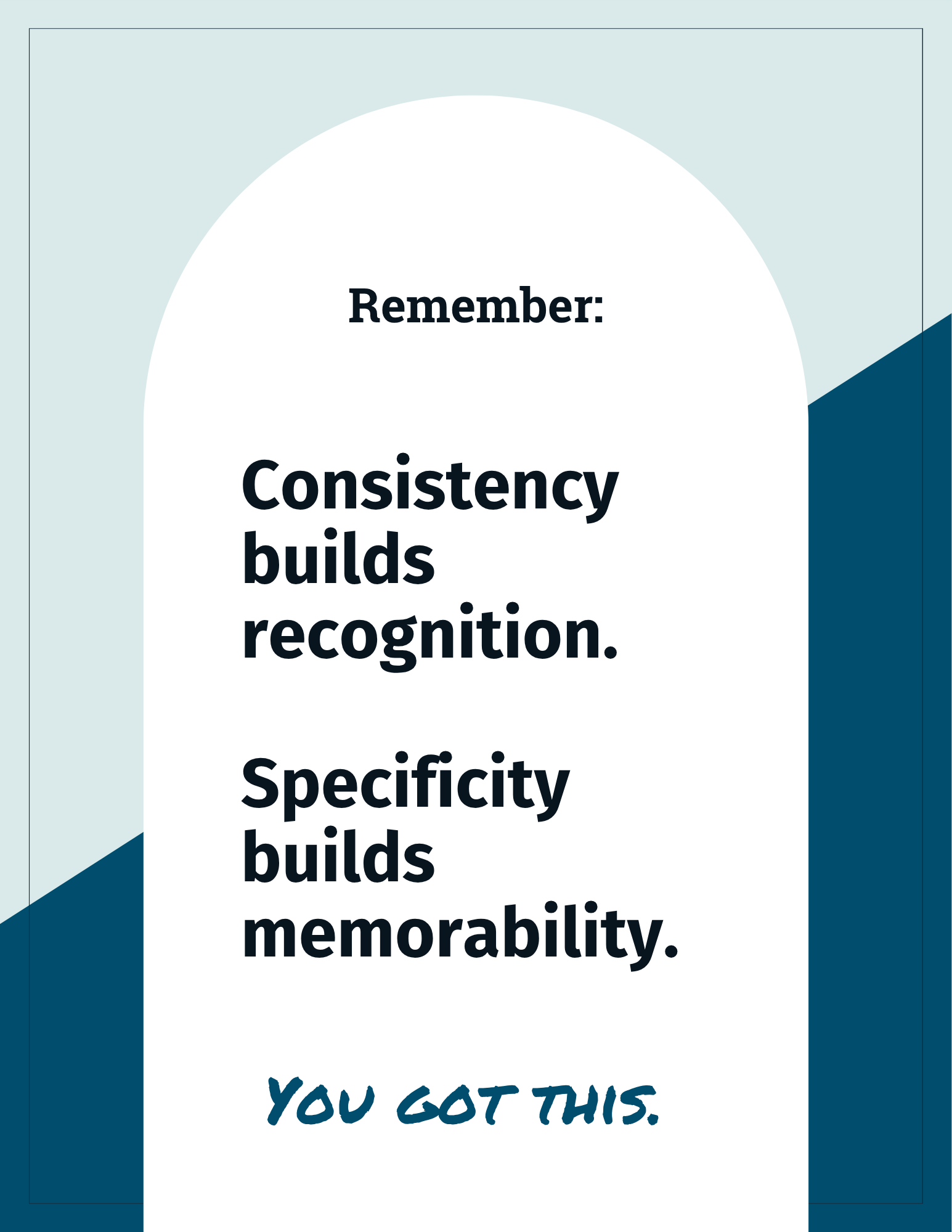
Your positioning statement isn’t necessarily a designated section of your résumé.
Professional positioning is the strategic core that brings coherence to our messy lives.
Why this matters beyond the résumé
Your positioning statement isn’t necessarily a designated section of your résumé. Professional positioning is the strategic core that brings coherence to our messy lives.
Look, it’s 2026. I know that the words “personal brand” evoke visions of influencers and hype houses, which is to say “personal branding” gives most people the ick. So if it helps, call it a “Talent Brand.” Your Talent Brand is a very intentional application of your personal brand in the talent marketplace. It’s bigger than your job search, it informs your LinkedIn headline and About section. It guides which roles you pursue and how you tailor each application. It determines what you say when someone you respect asks what kind of work you’re looking for.
When the positioning is right, the rest of the recruitment process gets easier. The hiring climate hasn’t gotten better overnight, but a strategic professional position empowers you to stop wasting effort on the wrong opportunities and start showing up clearly in the right ones. When your positioning is wrong or missing, every piece of the process takes more effort and produces thinner results.
It takes courage to try a new approach, edit your accomplishments, and really own what makes you different from every other candidate. But a positioning statement so broad that it could belong to almost anyone, means it positions you as almost no one.
If you’re ready to develop a strategic foundation for your job search, the Career Positioning Workshop is a 90-minute one-on-one strategy session designed to surface and sharpen your positioning — before you update your résumé., your LinkedIn, or anything else. Book your session now →
Nancy Martira is a brand strategist and communications consultant. She delivers human-centered strategies tailored to your specific business challenges and market position. You can hire Nancy for brand positioning and content strategy projects. Have something else in mind? Let’s talk.
