
How (and Why) to Look for 10 Minutes
Trouble with your focus? Challenge yourself to spend 10 minutes looking at a painting. Here’s what happened when I spent 10 minutes giving my undivided attention to Gustav Klimt’s Portrait of Adele Bloch-Bauer I.
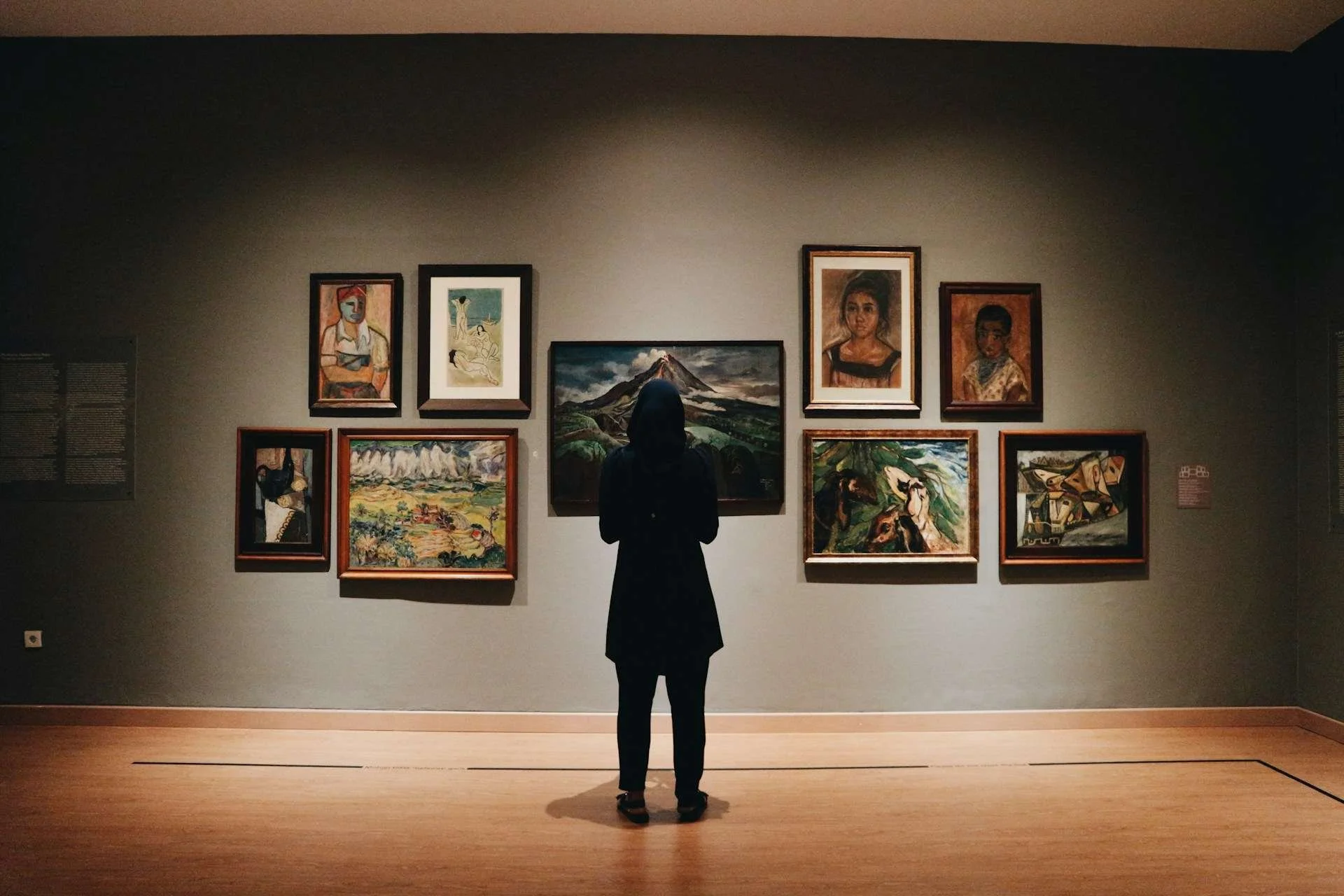
Photo by Salfa Imani via Unsplash
The Small Idea: Looking Closely is a Skill We Can Reinforce with Practice
The Spark: 10 Minute Challenge: Gustav Klimt’s Woman in Gold, New York Times
I'd never heard of Gustav Klimt until I arrived in Austria in August 2001. Soon, I saw Klimt every time I turned my head. His works as ubiquitous as the gold foil-wrapped Mozart Kugeln sold in every tourist shop. I was a third-year university student settling in for a year abroad in Vienna. I was there to learn about this new fad of European integration; I found myself in the home of Mozart, Beethoven, Mahler, Klimt, and Schiele almost as an afterthought.
Klimt's art is plastered across Vienna: from dorm rooms and tourist traps to the Leopold Museum and Vienna Secession Exhibition Hall. I've seen Portrait of Adele Bloch-Bauer I many times: I've seen it appear as cheap posters in IKEA frames and I've seen the original painting up close at the Neue Galerie in New York City. Now, thanks to the New York Times, I was about to look at it again. But what was I looking for?
The challenge is deceptively simple: spend 10 minutes looking at one painting. You can zoom in on the painting, but there's no wall placard. Just look at the image on your screen and notice what you notice.

Public Domain image via The Yorck Project (2002) 10.000 Meisterwerke der Malerei (DVD-ROM), distributed by DIRECTMEDIA Publishing GmbH. ISBN: 3936122202. 2. Neue Galerie New York
I've never formally studied art, but I like to go to art museums. Like cathedrals and churches of the old world, I find art museums familiar and peaceful. And also like visiting Catholic churches, I get the sense that in an art museum, I almost, but not quite, belong.
Here's the best thing about visiting basilicas around the world: even a lapsed Catholic like me knows exactly what to do. Sure, you can pray if you like, but if you need a little more structure, you can always light a candle. You put a coin in the box, light a candle, and honor the memory of your dead. It's universal, it's transactional, it's eternal.
If an art museum is like a cathedral, then looking at the art feels like prayer. I need a little more scaffolding to prop me up. What am I looking for? Am I supposed to start in the upper right corner and gaze left to right, up and down? Do I have to look at every painting? How long does it take to properly look at a painting? This is why most of us end up in the gift shop.
“If an art museum is like a cathedral, then looking at the art feels like prayer. I need a little more scaffolding to prop me up.”
Our Attention Crisis
You may have heard that humans today have the attention span of a goldfish. This old chestnut is oft repeated by marketers to stress the importance of hooking your audience in the first 2.8 seconds or whatever the nonsense number is now.
Although the goldfish fun fact has been debunked, I think it's pretty clear that we have a problem. The Center for Attention Studies at King's College London published a report in 2022. 47% of people surveyed agree with the statement "'Deep Thinking' has become a thing of the past." Yikes.
Estimates now put the human attention span at around 47 seconds, so let me assure you: 10 minutes feels like an eternity. This isn't inevitable cognitive decline. It's environmental adaptation. We've trained ourselves to scroll, to skim, to process information in rapid bursts because that's what our devices reward. As neuroscientist Amishi Jha explains, "Attention is trainable. It's like a muscle—use it or lose it."
The 10-minute challenge isn't really about art appreciation. It's about recovering a capacity we've systematically trained ourselves out of: the ability to stay with one thing long enough to begin to see it.
Museum Anxiety
Every time I enter a museum, my mind immediately goes to thinking about art heists. I bet I'm not the only one (unless this is a strange legacy of the Isabella Stewart Gardner Museum heist imprinting on me during my formative years.) I don't know the unspoken rules of art museums, the secret handshake of art historians. So even just entering the building feels a little dangerous, a little nefarious.
I believe this anxiety is at the root of our museum behavior. Research on museum behavior consistently shows that visitors spend surprisingly little time looking at individual artworks — often less than 30 seconds — with much of that time spent reading labels rather than looking at the piece itself. Now when I walk into a museum, I give myself a little pep talk: there is no wrong way to look. The point isn't to decode some hidden meaning the artist has embedded for MFA graduates; this is not The DaVinci Code. The point is to practice seeing what is there.
Harvard art historian Jennifer L. Roberts has her students spend three hours looking at a single artwork. Three hours. Can you imagine? Roberts has a lot to say about "deceleration and immersive attention," but honestly I just skimmed the article. (See what I did there?) Hey, why don't you read the article and tell me something insightful that you learned.
[Insert your own brilliant transition paragraph here]
Amishi Jha, Neuroscientist:
"Attention is trainable. It's like a muscle—use it or lose it."
Why Looking Matters Now
In an age of AI-generated images, deepfakes, and algorithmically curated reality, the ability to look closely isn't just aesthetic — it's survival.
When I can't tell if that photo is real or generated, when headlines are designed to trigger rather than inform, when my entire media diet is optimized to keep me engaged but not informed — sustained attention becomes an act of resistance.
Media literacy expert Renee Hobbs (University of Rhode Island) argues that close looking is foundational to critical thinking: "If we can't slow down enough to actually see what we're looking at, we can't evaluate it, question it, or think critically about it."
The 10-minute challenge trains exactly this muscle: the ability to stay with something long enough to move past your initial reaction and see what's actually there.
Two Small Experiments
The 10-Minute Challenge
Pick any artwork. It could be from the New York Times challenge, your local museum's website, or even a painting you pass every day. Set a timer for 10 minutes. Just look. When your mind wanders (and it will), gently bring your attention back to the image. Notice colors, patterns, textures. Notice where your eye wants to rest. Notice the discomfort of staying put.
The Wall Text Rebellion
Next time you visit an art museum (or scroll through an online collection), completely ignore the wall text. Don't read about the artist, the period, the technique. Just look at three pieces for as long as you want—30 seconds or 30 minutes. Then, if you're curious, read the context. Notice how your direct experience compares to the "official" interpretation.
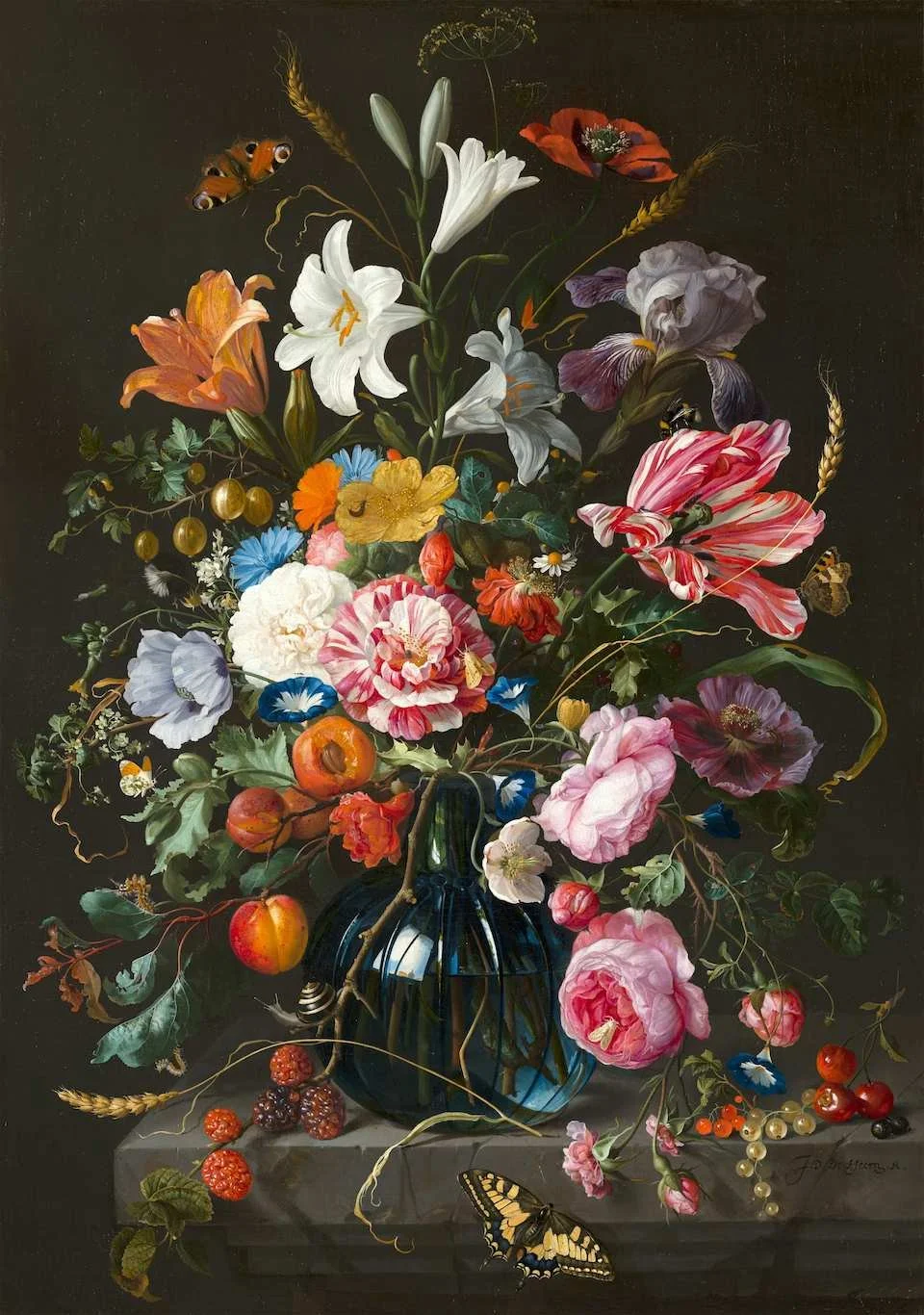
Oil painting by Jan Davidsz de Heem, 1670. Public domain photo provided by Europeana
The Wonder of Sustained Attention
At the risk of self-aggrandizement, there's something quietly radical about spending 10 minutes looking at one thing in 2026. It's a small rebellion against the attention economy that profits from our distractions. It's training for a deeper way of being in the world, one where we can stay with complexity, sit with discomfort, and see beyond our first impressions.
In the 1940s, the Nazis seized Portrait of Adele Bloch-Bauer I, removed her name, and called the painting The Woman in Gold. There's an entire fascinating story there for you to explore (the Wikipedia page is a good starting point.) It's an honor and a privilege to spend any time at all with Adele.
When you look at something long enough, it becomes impossible to reduce it to a label. The Nazis tried to strip away Adele's Jewish identity and recast her as a generic woman instead of a person with status and vanity and sensuality; a complicated marriage, a life cut short by meningitis at age 43.
Sustained attention is an act of resistance against reduction. When we take the time to look — not glance, or scroll, but genuinely see — we encounter complexity that defies easy categorization. We see the swirls like a Minoan labyrinth, the Eye of Horus from Egypt, the crooked finger she took great pains to hide. We see a human being who existed in a specific time and place, loved and suffered and sat for countless hours in an artist's studio.
The painting doesn't need me to understand it. It just invites me to show up and look. Everything else — the meaning, the connection, the wonder — emerges from that simple act of sustained attention.
The real challenge isn't focusing for 10 minutes; the challenge is whether we're willing to practice seeing what's actually there instead of settling for the label someone else has given it.
The Question
When was the last time you gave something your undivided attention for 10 minutes? What might you discover about the world if you practiced looking more closely?
