
The Art of Brand Naming: Revealing the Invisible Color
Brand Naming is an Art. What’s Your Strategy?
The Surrealist and Modern Artist Marcel Duchamp said, "The title of a painting is another color on the artist's palette." Maria Emilia Ferdanez, a curator and writer in Mexico City, adds that Duchamp “consistently gave titles an important role, treating each ‘like an invisible color,’ a pigment that bypassed the eyes to appeal to the mind.
What does this mean for brand naming and, more broadly, titling your creative work?
In Fernández’s wrote essay for the Museo Jumex Foundation, “A Title is an Invisible Color,” she asserts that whether you’re deliberate about titles or consider them an interference between the viewer and the work of art, that choice is a form of artistic labor.
“Faced with infinite options, selecting one name means discarding all others. Naming allows one to see, to make sense of visual experience and create a sense of order and control over the world around us.”
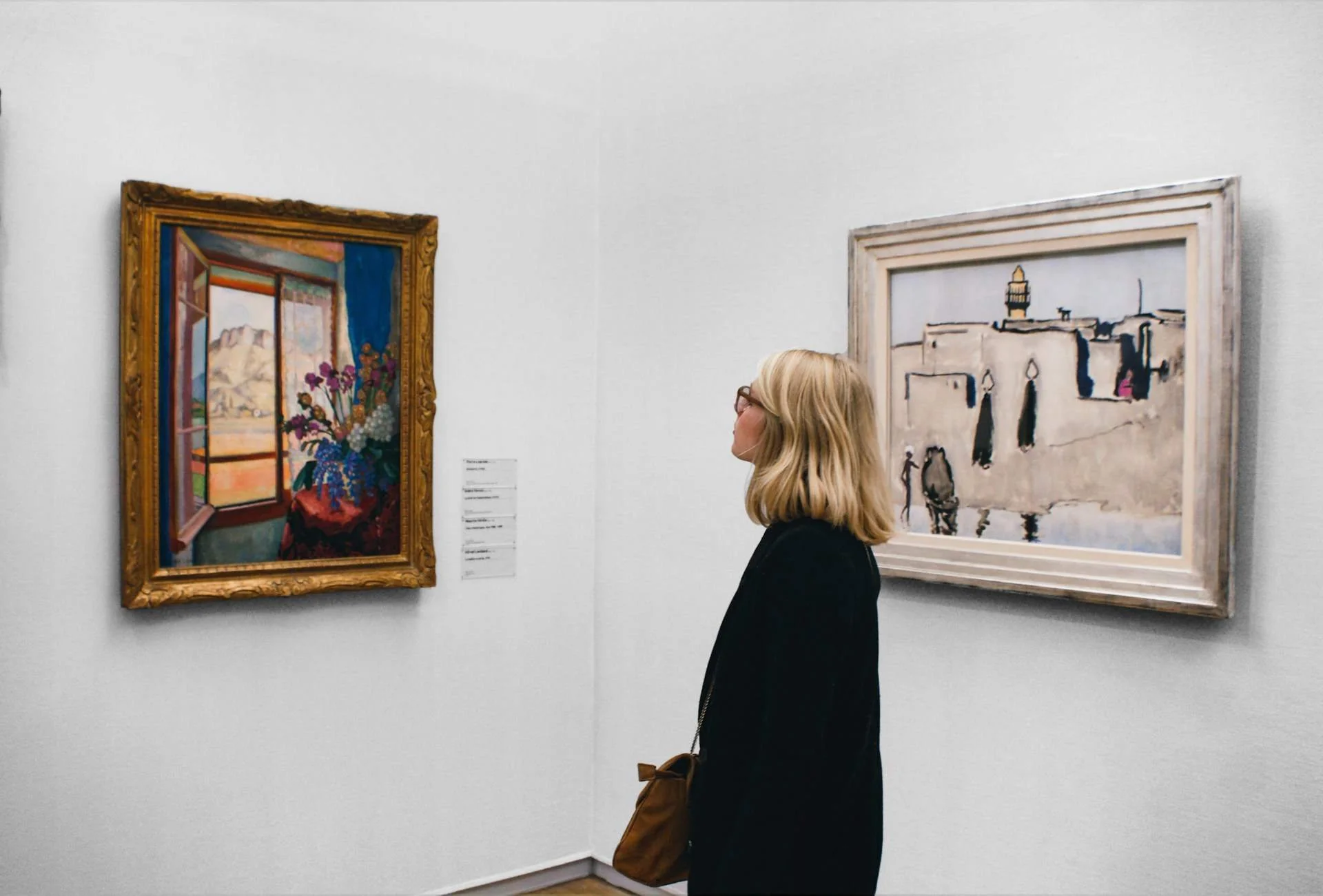
A brand is not a work of art, but I like the idea that the brand name isn’t like a museum wall plaque explaining the painting; the name is part of the composition of the brand, another layer of meaning that didn't exist before the people behind the brand chose this very specific brand name.
The Brand Naming Reveals What Was Already There
Fernández's essay is full of striking examples from the art world. Gabriel Orozco photographs a rusty pipe fixture reaching out from under an outdoor sink; it evokes water, neglect, decay. But he names it Pulpo (Octopus), and suddenly you see the pipes as tentacles. They were always there. The title didn't create the pipes, it made the connection to something unexpected.
Or consider Félix González-Torres, who shows you a standard-looking family portrait: a man, a woman, two kids. You might walk right past it. Then the parenthetical title lands —Untitled (Klaus Barbie as a Family Man) — and the photograph detonates. An ordinary domestic scene becomes monstrous. The name didn't change the image; it changes everything about how we experience it.
Fernández writes, "The act of naming can radically transform an image, an action, or an object, revealing something that lay hidden in plain sight."
That is to say, the title of the work didn't add something new to the work, it uncovered something that was already true but invisible until language gave it form.
So What Does This Have to Do with Your Brand?
If you're a solopreneur or independent consultant, invoking an art historian’s thoughts on titles may reek of overthinking, but I believe this is exactly the level of thoughtfulness that naming a business requires.
When most people approach brand naming, they treat it like labeling, a functional task. They describe what they do (Leadership Blueprint, Strategic Solutions Group, Elevate Consulting) and call it a day. The name sits next to the business like a museum placard: informative, forgettable, interchangeable with a dozen others in the same hallway.
But Duchamp is describing something fundamentally different. The title isn't a label. It's a creative act with the same weight and consequence as choosing cadmium red over burnt sienna. A great title doesn't reinforce what you already see, it reveals something you couldn't see without it.
What if you approached your brand name with that same intention? Not as a description of your services, but as an invisible color that transforms how people perceive your entire business?
The Difference Between Labeling and Naming
Labeling is functional. It tells people what category you're in. It's the museum wall plaque: "Oil on canvas, 1952." Accurate, useful, and completely devoid of the thing that makes the painting worth looking at. Most generic brand names are labels. They describe what you do (Strategic Planning Associates) or gesture vaguely at your aspirations (Breakthrough Coaching) without revealing anything about who you actually are.
Naming, the way Duchamp means it, is generative. It adds a dimension that didn't exist before. It reveals something about the work or the business that was always true but couldn't be seen until the right language gave it shape.
Think about some of the most resonant brand names you know. Patagonia doesn't describe outdoor clothing. It evokes a wild, remote, beautiful place at the edge of the world. That added dimension tells you everything about the company's relationship to nature and adventure in just one word. The name doesn't label the product; it transforms how you experience the brand.
What I Learned from Naming Broad Lake Partners
I got to experience this firsthand when I worked with my friend Aliya on a brand naming project. Aliya is a brilliant and energetic revenue consultant for nonprofit organizations. Clients have described her as a "catalyst for fun," which is not a phrase you hear often in a sector dealing with heavy issues. But the brand names she was considering when she came to me were generic: various combinations of the words “Purpose”, “Blueprint”, “Bridge” …
Working together, I helped Aliya see that her differentiation isn't just what she does (plenty of people do revenue strategy for nonprofits); it's how she does it. She reminds overwhelmed, underfunded organizations that changing the world can and should be energizing. That's a fundamentally different proposition, and it deserved a name that carried that energy.
When I asked Aliya about places that were meaningful to her — in both the macro (Wisconsin) and micro (kitchen table) sense — something shifted. She talked about round tables where everyone is equidistant from the center, about Lake Michigan as both a childhood anchor and current home, about the family vacation spot in Northern Wisconsin. Flow, collaboration, depth, expansiveness. All of it was already there in how she described her work. The naming question just made it visible.
We landed on Broad Lake Partners, a name that captures both wide perspective and profound insight. A name that suggests the kind of consultant who sees the full scope of your possibilities while diving deep into strategic solutions. A name with a subtle, cheeky nod to "broad" as slang for a woman, because Aliya is unapologetically a woman, a mother, and a feminist.
None of that meaning was manufactured. It was already embedded in who Aliya is and how she works. The naming process uncovered it, the way Orozco's title uncovered the octopus that was always hiding in the pipes.
The Untitled Problem
Fernández's essay also explores the other end of the spectrum: Untitled. It's one of the most common titles in contemporary art, and for some artists, it's a principled choice—a refusal to constrain the viewer's interpretation, an invitation to bring your own meaning.
I see the equivalent in business all the time. Consultants who name their practice after themselves (Jane Smith Consulting) or use their initials (JSC Advisory) are making a version of this choice. They're staying out of the way, letting the work speak for itself.
Sometimes that works beautifully. If you're a recognized expert and your reputation precedes you, your name IS the brand. But for most solopreneurs who are trying to stand out, say something new, or become discoverable beyond their existing networks, Untitled is a missed opportunity. You're asking potential clients to do all the interpretive work themselves, to look at the blank canvas and figure out what it means. The consultant whose brand name is a vague acronym but whose tagline has to do all the heavy lifting because the name itself reveals nothing.

Your generic brand name sounds like this.
Eva Rothschild’s Provocation
One more idea from Fernández's essay really landed with me. She profiles the sculptor Eva Rothschild, who says titles should "create further space around" the work. They should "misdirect you" and "add a layer of confusion."
That's a provocative thing to say about naming. But I think she's onto something important for brand strategy.
The best brand names don't close down interpretation. They open it up. They make people lean in and want to know more. Rothschild's sculpture Twins bears no resemblance to a pair or duo. That gap between the name and what you see is precisely what creates intrigue.
I'm not suggesting you should deliberately misdirect potential clients (although ad agencies often use this strategy). But I am suggesting that a name with a little mystery, a little tension, a little gap between the literal and the evocative, gives people a reason to be curious. And curiosity is the beginning of every good client relationship.
A name like "Elevate Leadership" closes the loop. You know exactly what it means, and there's nothing left to discover. A name like "Broad Lake Partners" opens a question: what's the lake? Why broad? That small moment of curiosity is the invisible color doing its work, adding depth, dimension, and intrigue that a purely descriptive name never could.
What This Means for Your Brand Name
If you're wrestling with naming your business — or if you named it years ago and it's never quite felt right — here are a few questions worth sitting with, inspired by Duchamp's invisible color:
Is your name a label or a name? Does it describe what you do, or does it reveal something about who you are and how you work? There's a significant difference between the two, and labels are easier to forget.
What's already there that you haven't named yet? The octopus was always in the pipes. Aliya's connection to water and expansiveness was already embedded in how she talked about her work. What's the thing about your business that's hiding in plain sight, waiting for the right language to make it visible?
Does your name create space or close it? A good name invites curiosity. It gives people enough to be intrigued without spelling everything out. If your name leaves nothing to the imagination, it may also leave nothing to remember.
Would you be excited to introduce yourself with this name? Aliya told me that putting herself and her brand into the world was "one of the most truly terrifying things I've ever done," but that the brand itself is "rock solid: it's bright, colorful, a little retro, and there's a tongue-in-cheek vibe that fits who I am." Your brand name should feel like that—a little scary, maybe, but undeniably yours.
Fernández closes her essay with a beautiful metaphor. She suggests we think of a title as a letter to the viewer: "Even if you send a blank piece of paper in the mail, open-ended and ambiguous, you can be sure that the recipient will find a way of reading their own message onto it, of painting with an invisible pigment."
Your brand name is a letter to every potential client who will ever encounter your business. It can be blank, generic, interchangeable or it can carry an invisible color that changes how they see everything that follows.
Read María Emilia Fernández's full essay, "A Title is an Invisible Color," atMuseo Jumex.
Curious about the full Broad Lake Partners brand naming process? Download the case study.
Nancy Martira is a brand strategist and communications consultant. She delivers human-centered strategies tailored to your specific business challenges and market position. Hire Nancy for brand positioning, messaging, and content strategy projects. Have something else in mind? Let’s talk.
